
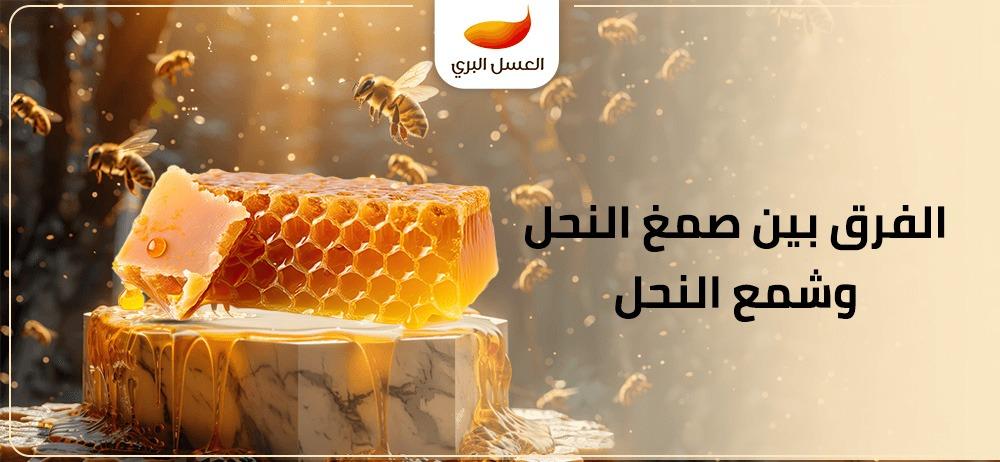
Bee products are numerous, including honey, royal jelly, beeswax, bee bread, propolis, bee pollen, and other products. In this article, we provide information about the difference between bee glue and beeswax, as some people think they are the same thing, but this belief is wrong. Here is more information about each of them.
The difference between propolis and beeswax
Bees do not just make honey, they also make other products such as bee glue, propolis, propolis, and beeswax, which are all names for the same thing. Bees also produce beeswax, which is a completely different product than bee glue. Since bee products are different, it is important to know each one so that you can buy what you need to get the health benefits. All of these products are packed with nutrients and health benefits.
The difference between propolis and beeswax in terms of use for bees
Bee cells consist of 3 basic materials: honey, beeswax, and propolis. Each of these types has its own specifications and characteristics. But they all have one thing in common: bees produce them. Here are the most important points that explain the difference between propolis and beeswax for bees:
bee glue
Propolis, or bee glue, is a sticky substance that resembles glue, hence its name. It is white or brown in color and has many properties, such as antiseptic properties and antimicrobial properties. Bees collect it from the buds of some trees and mix it with saliva. Bees use it for many purposes, such as:
- Covering the beehives from the inside.
- Filling gaps and cracks between cells.
- Reducing the risk of the spread of microbes and fungi in the hive and thus protecting it during the winter.
- It protects the hive from insects, which are injected with poison and mummified in propolis.
beeswax
Beeswax is made by worker bees by converting their nectar and honey stores into compounds. These compounds are secreted from specific glands in the bee's abdomen. Bees use beeswax in:
- Beeswax is an important material for building a beehive.
- Food storage.
- Bee egg laying.
- Sheltering young bee larvae.
The difference between propolis and beeswax
The difference between propolis and beeswax is clear to us in several points, the most important of which are:
- Components of bee glue: Bee glue or propolis consists of balsam, which constitutes 40%-70% of all components, in addition to sugars, proteins, amides, amino acids, amines, essential oils, minerals, vitamins, sugars, and carbohydrates.
- Beeswax components: Beeswax consists of carbon, oxygen, and hydrogen.
- Uses of propolis: Propolis has many uses as it is used medicinally to help treat various diseases such as minor burns, relieve digestive disorders, and reduce the incidence of tooth decay. It also plays a role in improving some skin problems, such as; bacterial infections, acne, and ulcers.
- Uses of Beeswax: Beeswax is used for various dishes such as sweets, fruits, and nuts. It is also used in the manufacture of cosmetics, creams, soaps, and lipsticks. It can also be used as a natural fragrance, and it is used to make nice and natural candles.
What is beeswax?
Beeswax is the basic material for the formation of the cell, which is a structure of hexagonal cells in which honey, pollen and all honey products are stored. It also contains bee larvae that are in contact with each other and have a wonderful shape, as this design does not allow for any spaces in the cell and increases the filling of more storage units. Also, the proximity of the cells in this way makes their area increase quickly and preserves the energy of the bees. There are small glands in the abdomen of the bee that produce wax, by swallowing a little honey, then the sugar turns into small pieces of wax, and this wax combines with saliva and becomes the shape on it.
What is bee propolis?
Propolis, or bee glue, is a sticky substance similar to glue that bees use for various purposes, the most important of which is to insulate the hive from extreme temperatures, ensure that holes in the hive are closed, and protect it from insects and predators. Bees collect nectar, pollen, and sometimes tree sap, to transport these components to the hive and combine them with a group of different materials to produce bee glue.
What are the properties of propolis?
Propolis has a set of wonderful properties that make it a unique bee product. Here are the most important of these properties:
- Antimicrobial.
- antiseptic.
- Anti-inflammatory.
- Antioxidant.
- Immune system regulator.
- Anti-cancer.
- Antiprotozoal.
- Neuroprotective activity.
However, it should be noted that the composition of propolis varies from season to season and from hive to hive, depending on the resin collected by the bees. But in general, it is a nutritious and wonderful food.
Benefits of propolis
Now that we know the difference between propolis and beeswax and the uses of each for bees, we must also mention their benefits. Here is more information about the benefits of propolis:
- It helps in treating digestive system diseases because it contains important substances such as caffeic acid phenethyl ester (CAPE), flavonoid chrysin and artepilin C.
- It contains many antioxidants that give it its health benefits, in addition to its anti-inflammatory effects.
- Helps the body fight infection.
- It helps relieve dermatitis and neurodermatitis.
- It helps speed up the healing of wounds and burns.
- It helps in treating acne, eczema and psoriasis.
- It plays an important role in preventing tooth decay.
- It treats gingivitis and stomatitis.
- Helps relieve cold and flu symptoms.
- It increases antioxidant enzymes, thus preventing oxidative stress.
- Propolis is commonly used in drug formulations used to treat upper respiratory infections, common colds, and flu-like infections. For example, cough syrups, lozenges, and throat sprays. It is also used. as a mouthwash to prevent tooth decay and treat gingivitis and stomatitis.
- It is used in the manufacture of some creams to combat acne, scars, pigmentation and texture problems. In addition, it plays a role in treating eczema and psoriasis due to its anti-inflammatory properties.
However, despite the many benefits of propolis, the patch must be chosen carefully if it is to be used topically, by applying a small amount of it to the skin in order to find out whether the person is allergic to it or not.
Side effects of propolis and beeswax
After we learned the difference between propolis and beeswax, we must learn about their side effects as they are the same, and despite the many benefits, they should be used in moderation and it is preferable to consult a doctor to determine the appropriate dose, especially if the person suffers from any health problems. Here are the most important side effects that may result from taking propolis and beeswax:
- Allergy: All bee products can cause allergies, especially in people with asthma or respiratory problems. Bee products should also not be given to people with honey or pollen allergies. Symptoms include swelling, redness, shortness of breath, and other uncomfortable symptoms.
- Pregnant and lactating women: Pregnant and lactating women should consult a doctor before using any bee products in order to determine the appropriate dosage, and to prevent any health problems that may result.
- Increased risk of bleeding: Taking propolis and beeswax slows blood clotting, so they should be avoided by those who suffer from bleeding disorders, or by people who are about to undergo surgery.
- Botulism: Children under one year of age should not be given any bee product because their stomachs cannot handle it and food poisoning may occur, which sometimes leads to death.
the reviewer:
You may also like:
- The difference between white and black honey
- The difference between natural and artificial beeswax
- The difference between royal honey and organic honey
- The difference between beeswax and honey wax
- The difference between honey and honeycomb